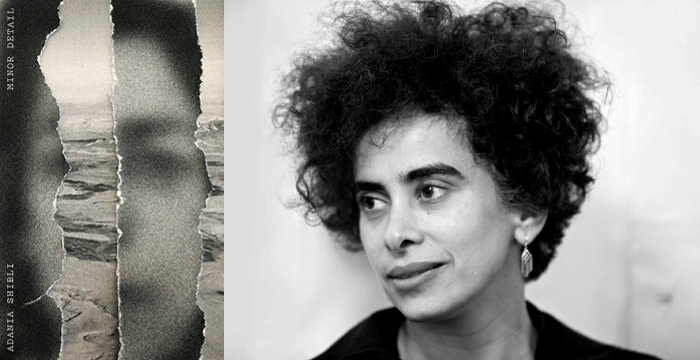
Adania Shibli Mapping of Palestine in Minor Detail
Minor Detail by Adania Shibli is a gripping story of space and maps. The book is divided into two parts: Narrated by the third-person point of view, the first story revolves around the rape and kill of a Bedouin Arab woman in Negev desert during the 1947–49 Israel War of Independence, and the second part unfolds through the first-person female character who is searching for the rape spot on current map of Israel after 25 years.
While the officer, antagonist character of the first part, and his soldiers are constantly seeking what they called “infiltrators” in the desert space day after day in blazing heat, depending heavily on maps – The soldiers in attendance listened as they followed the movement of his hands over the map laid out in front of them, where the camp’s position appeared in the form of a small, barely discernible black dot inside a large gray triangle (40) – , he decides to get rid of the girl in an uncharted place –“They departed this time without opening the maps they usually studied before setting off on a patrol. Instead, he instructed the driver to head toward a certain location. “To that hill,” he said curtly, aiming his hand at a ridge which was inscribed into the line of the horizon. (12)
Desert space of the first half of novel under the scorching heat of August is replaced by the labyrinthine street of modern Israel where it gives female protagonist a feeling of disorientation and dizziness. To put it in Deleuze spatial terms, the smooth surface (desert) is replaced by striated space (city and street).

To be quite honest, once I cross a border, I fall into a deep pit of anxiety. It’s a matter, simply put, of clumsiness. Once I realized that I inevitably fail whenever I try to navigate borders, I decided to stay within the confines of my house as much as possible.
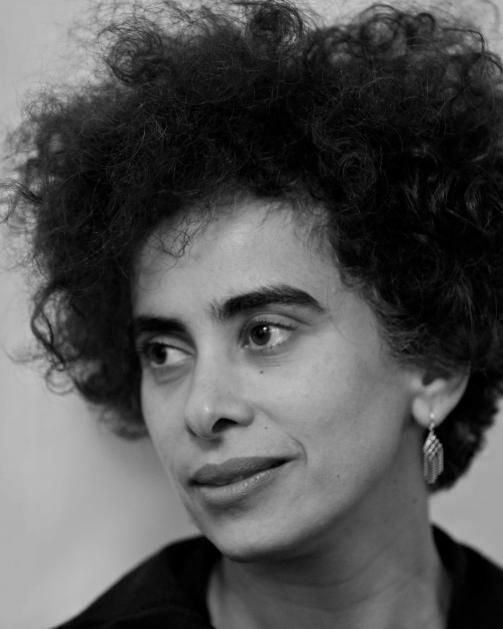
Embarking on her spatial journey under the alias of the geography and social topography researcher, she takes different maps of the region, Palestinian and Israeli, yet, she puts the latter on the former one (I return the map to the seat next to me, on top of the other maps -53), which parallels the occupation of Palestine land by Israeli government and people. She frequently expresses her anxiety and uneasiness in Israel owing to the unfamiliarity of space. The old space is cut into Area A, B, C and D and each section is separated by military checkpoint and above all the great Wall between the Palestine and Israel.
The borders imposed between things here are many. One must pay attention to them, and navigate them, which ultimately protects everyone from perilous consequences. This grants a person a sense of serenity, despite everything else. There are some people who navigate borders masterfully, who never trespass, but these people are few and I’m not one of them. As soon as I see a border, I either race toward it and leap over, or cross it stealthily, with a step. Neither of these two behaviors is conscious, or rooted in a premeditated desire to resist borders; it’s more like sheer stupidity.
Minor Detail (31)
She keeps searching for the murder spot, but it is inaccessible through maps; her effort is fruitless. Not only is she unable to find the exact spot on map, but also it gives her a sense of alienation and estrangement more and more. It seems that the natural landscape works better for her than the Israeli map she keeps looking on at it on the passenger seat, “The drive seems much shorter this time than it did yesterday, and I let myself be guided by the arched lines of the hills, then the groves of mango, avocado, and banana, as opposed to the maps” (57).
At the end of the novel, when she goes after the old woman (The ghost of the same killed woman?), she was entering into space unmarked on the new map, “ the Israeli map just shows scattered dots far from the road, indicating a military training zone and a shooting range” (61). What she is after is beneath the new map, hidden under the new power. By trespassing different borders throughout the new space, she reaches an unmapped space; hence, she can’t be there. She, as a bold trespasser, is the uncanny entity in the non-existence map, so her existence is problematic; No wonder at the end, she must be wiped out in the uncharted territory.
Taking spatial studies into consideration, Adania Shibli’s tile is kind of ironic given the fact she fills the second part of the novel with considerable detail of cityscape. Adania Shibli, in this sense, tries to unearth the historical map of the region through the minor event, rape and killing of a woman, in her novel Minor Detail.
